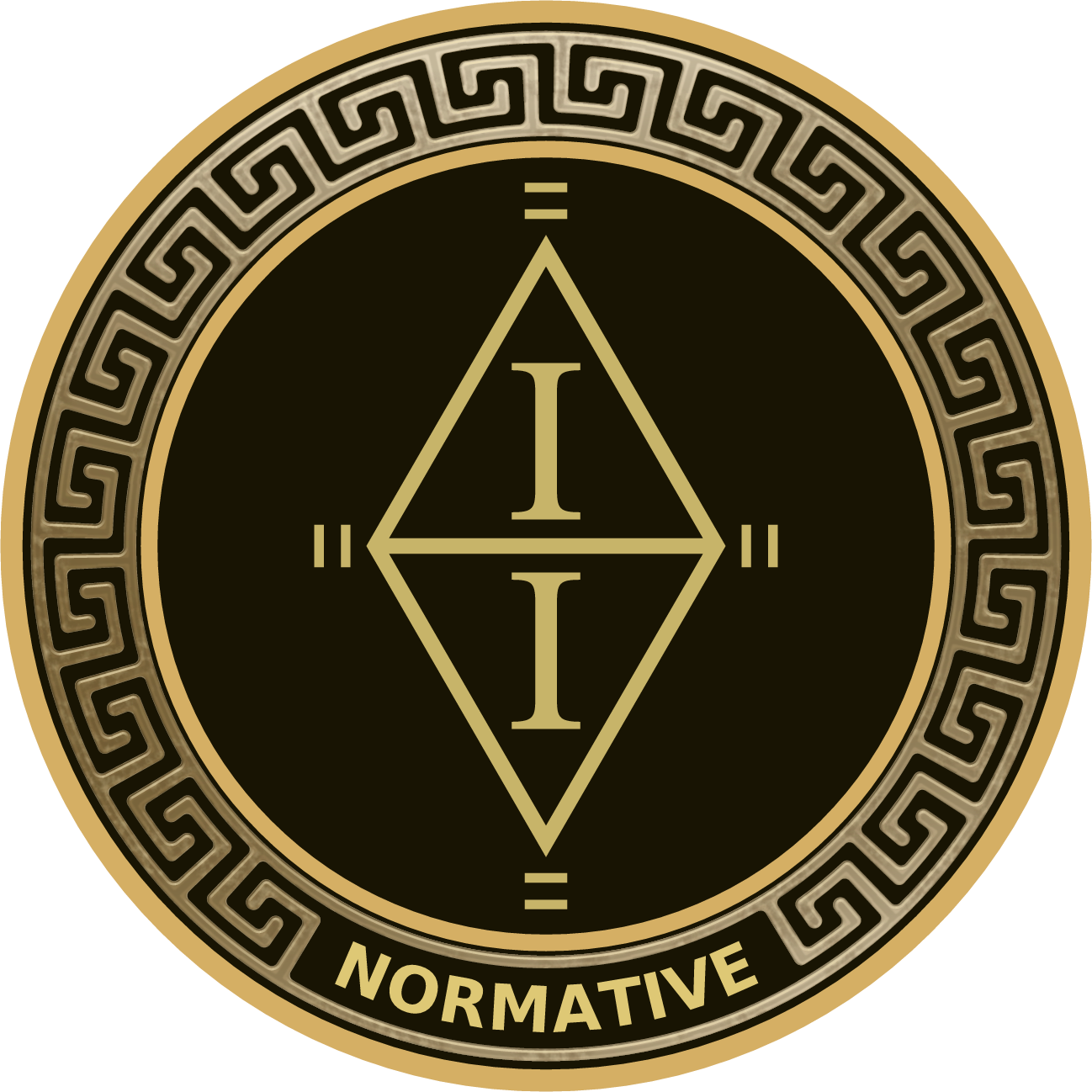
I : (x, y) → (x, y)Read it
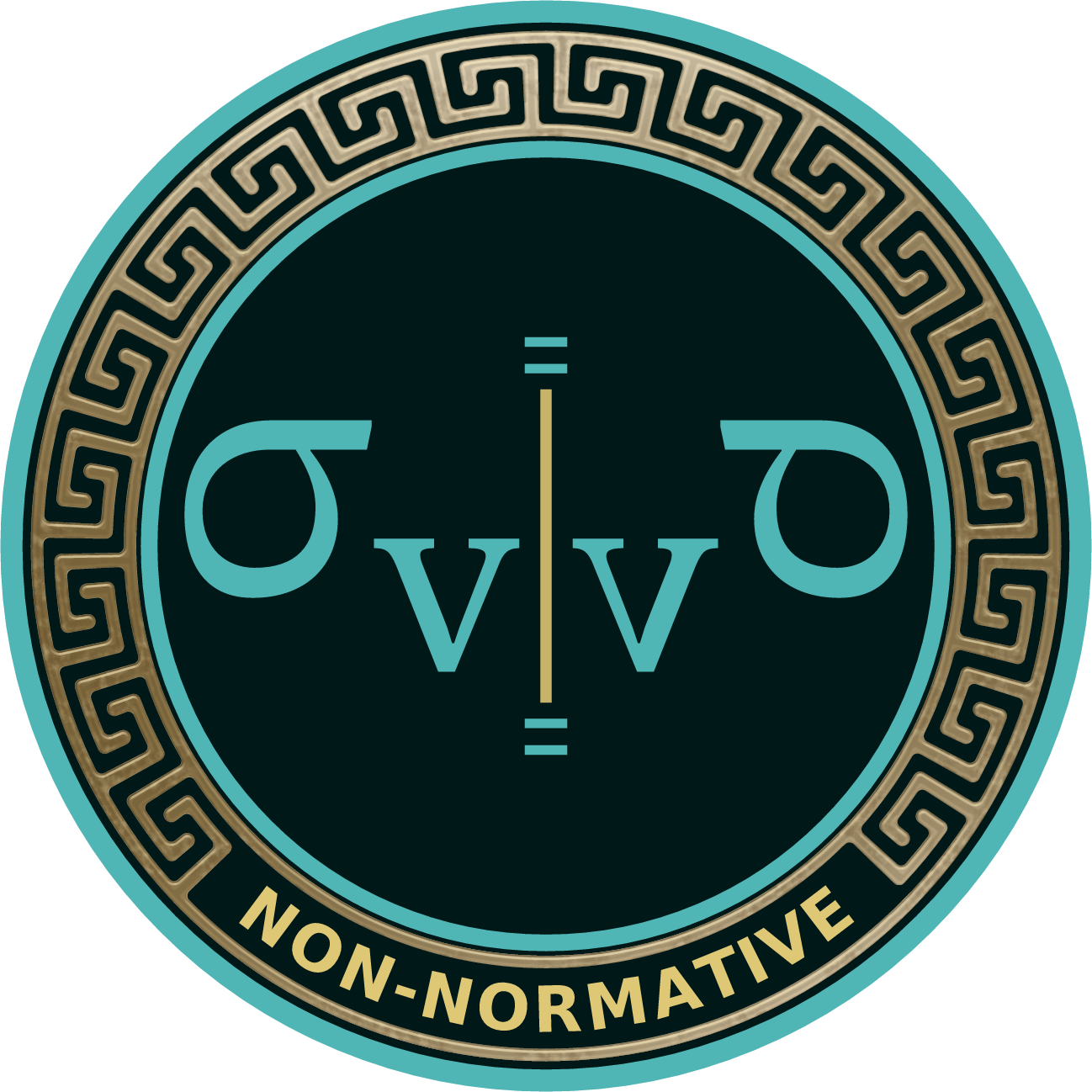
σᵥ : (x, y) → (−x, y)Read it
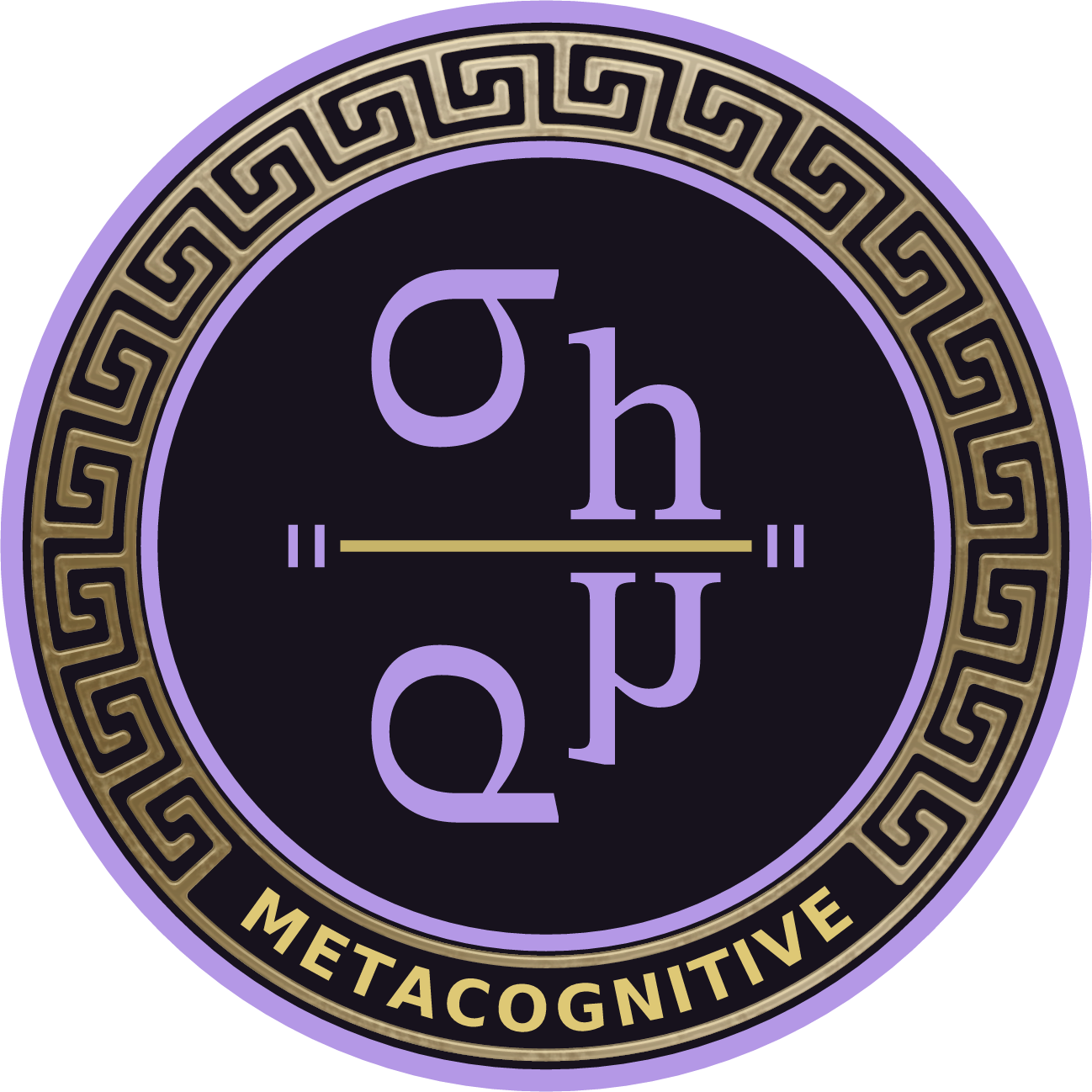
σₕ : (x, y) → (x, −y)Read it
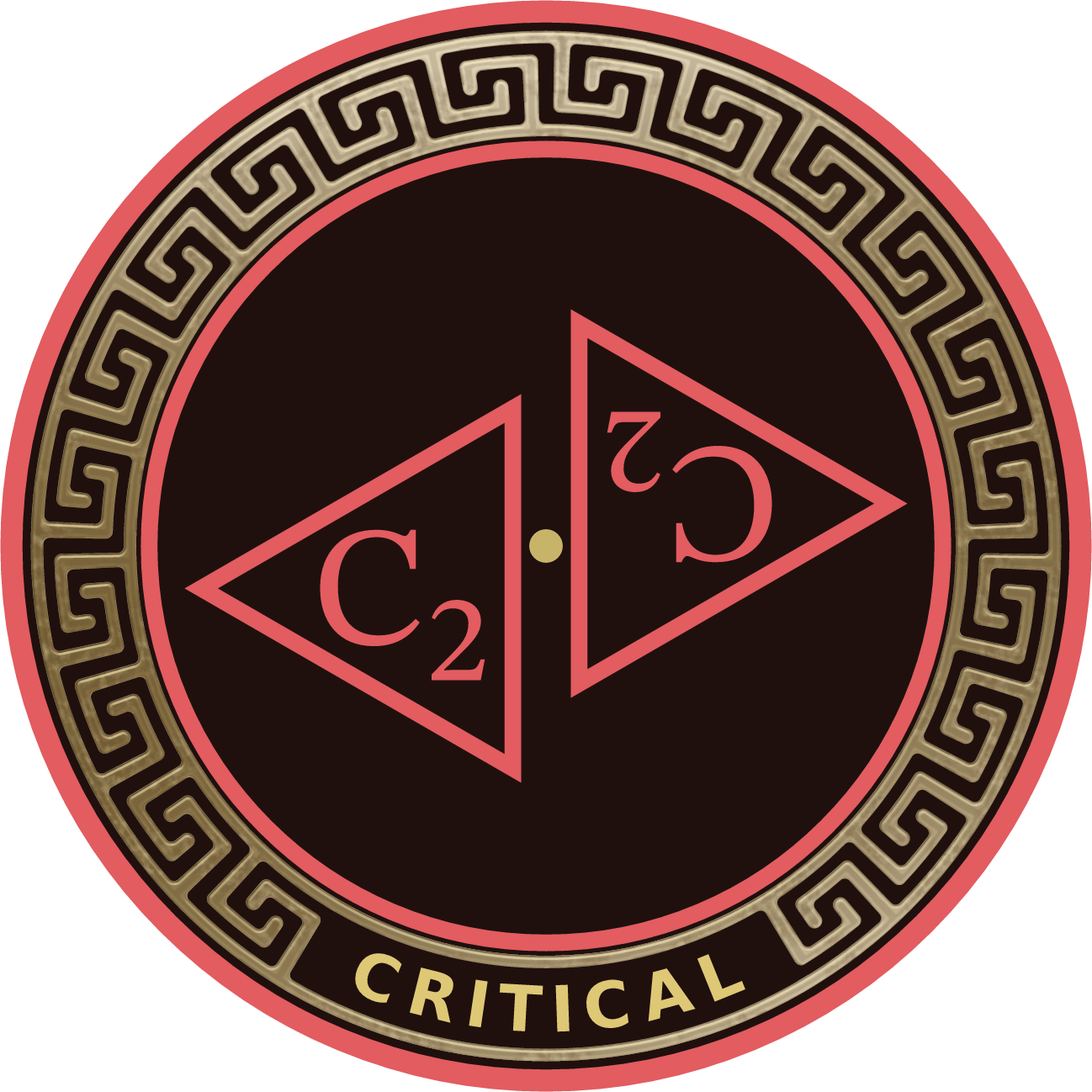
C₂ : (x, y) → (−x, −y)Read it
The Tetrasemaphore in one paragraph
The Tetrasemaphore is four semaphores that mark how a piece of work stands: NORMATIVE, NON-NORMATIVE, METACOGNITIVE or CRITICAL. Each state is a move of a flat picture, and each semaphore carries a mark built to survive its own move, written in the symbols chemists and mathematicians already use for symmetry. Every claim it makes can be checked with your body, a pen and paper, a phone, a printer, a proof checker or a friend, and the one question still open, whether it helps people think about their thinking, can be tested.
The aim of the whole project is to point at some mathematics that was always there, for each reader to check for themselves and think with. It asks no one to take on or give up a belief.
People picked up the abacus, then the calculator. Some abacus users learned to put it down and move the beads in their heads. The four moves can be learned in your mind, with a scrap of paper, or with your body, and most people end up using all three. Whichever you start with, the other two are how you check it. Whether that helps is what the tests are for.
What it is
The Tetrasemaphore is an attempt to teach people to think about their thinking. It asks two yes-or-no questions of any piece of thinking. Is it looking at its object, or back at its own frame: the premises, method and assumptions it judges from? And does it keep its stance toward the standard, or reverse that stance, the way a mirror reverses left and right? Two yes-or-no questions have exactly four answers. NORMATIVE keeps its stance and looks at its object: what has been tested and holds, for now. NON-NORMATIVE mirrors its stance and looks at its object: exploration that stands alongside the standard without claiming to replace it. METACOGNITIVE keeps its stance but turns its look back to its own frame. You can picture that, or keep your feet planted and look back between your legs; the move is the same either way, and the move is what thinking about thinking means here. CRITICAL does both at once: it turns over the framework a claim rests on, treating every baseline assumption as possibly wrong. The Tetrasemaphore proposes holding two questions about any piece of thinking as two mirrors at a right angle, so that changing your stance or your focus becomes a move you can see, make and undo. In a flat picture the same four answers are four moves: leave it alone (I), flip it left to right (σᵥ), flip it top to bottom (σₕ), or turn it half way round (C₂), which is both flips at once. NORMATIVE is I, NON-NORMATIVE is σᵥ, METACOGNITIVE is σₕ and CRITICAL is C₂. The moves and their symbols were part of mathematics long before this project, and the semaphores point at them. That's what we do when we discover math: honor finally what is. Psychology has met this structure before: Jean Piaget held that formal reasoning uses four transformations that combine exactly as these four moves do (his INRC group; Inhelder & Piaget 1958). Each semaphore's mark is built to survive its own move: the σᵥ mark only the left-right flip, the σₕ mark only the top-bottom flip, the C₂ mark only the half-turn, and the I mark, whose move changes nothing, every move.
The semaphores are for naming the state of your own thinking, not for labelling anyone else's. That doesn't mean people can't be read: we read each other every day, better than chance for some things and only barely for others, such as lies, and we misread ourselves too. What turns either kind of reading into a measurement is knowing how often it is wrong. This starts with you, and it is meant for everyone.
Sources for this section
- Inhelder, Bärbel, and Jean Piaget. The Growth of Logical Thinking: From Childhood to Adolescence. New York: Basic Books, 1958. https://doi.org/10.1037/10034-000. Piaget's account of formal reasoning, including the INRC group: identity, negation, reciprocal and correlative, four transformations that form a Klein four-group.
- Bond, Charles F., Jr., and Bella M. DePaulo. "Accuracy of Deception Judgments." Personality and Social Psychology Review 10, no. 3 (2006): 214–234. https://doi.org/10.1207/s15327957pspr1003_2. Across 206 documents and 24,483 judges with no special aids or training, lie–truth judgments were 54% correct, where guessing gets 50%.
- Nisbett, Richard E., and Timothy D. Wilson. "Telling More Than We Can Know: Verbal Reports on Mental Processes." Psychological Review 84, no. 3 (1977): 231–259. https://doi.org/10.1037/0033-295X.84.3.231. People's reports on their own higher-order mental processes rest on implicit causal theories rather than direct introspection, and are sometimes accurate.
- Joint Committee for Guides in Metrology. Evaluation of Measurement Data — Guide to the Expression of Uncertainty in Measurement (JCGM 100:2008, the GUM), §0.1. https://doi.org/10.59161/JCGM100-2008E. A measurement result is reported with a quantitative indication of its quality, so that those who use it can assess its reliability. The Guide states this for physical quantities; this note applies the same standard to readings of a state of thinking.
The four semaphores
Each semaphore is one answer to the two questions, one move of a flat picture, and one mark built to survive that move. Read each one from the top: the picture, the move, the mathematics, then a story of the state in a life. The stories are analogies, labelled as analogies. The algebra is proven; whether the semaphores help people think about their thinking is the open question.
NORMATIVE· I
1The semaphore
Keeps its stance and looks at its object: what has been tested and holds, for now.
I state the standard. It marks epistemic status, not infallibility.
2The move
Leave it alone.
With your body. Stand as you are. Nothing changes.
On paper. The letter I looks the same after every move.
3The formulas
Every point stays where it is.
The same move as a matrix: the identity.
No mirror in it: a left hand stays a left hand.
Doing nothing before or after a move leaves that move as it was.
Its own way back, like every move here.
4What stays put
Everything. That is why the whole mark is gold.
The mark. Survives every move: σᵥ, σₕ and C₂ each leave it exactly as it was. In the proofs, its model mark is a seed together with all three of its images.
5The story: The Proven Ground · analogy
Stand upright, feet planted, facing forward. (x, y) → (x, y): no transform.
Newton’s laws of motion, published in 1687, held for more than 200 years before Einstein showed, in 1905, where they break down. During those years they were Normative: tested, verified, operational.
The Normative semaphore marks the move that changes nothing: the work has been done and the foundation holds. Not because it is permanently true, but because right now, the evidence supports it.
Checked in Lean: Move.act_I, T4_fix_I, T1_one_mul, T1_mul_one, T1_self_inverse, T10_det_table, S2_markAll_invariant
NON-NORMATIVE· σᵥ
1The semaphore
Mirrors its stance and looks at its object: exploration that stands alongside the standard without claiming to replace it.
I reflect the standard. It is reflection, not rejection.
2The move
Flip it left to right.
With your body. Turn around. To someone facing you, your left and right swap, and your top stays on top.
On paper. The letter A survives only the side-to-side turn.
3The formulas
Left and right swap; up and down stay.
The same move as a matrix.
A mirror: a left hand becomes a right hand.
Flip twice and you are back where you started.
Both mirrors, one after the other, are the half-turn.
4What stays put
The vertical line x = 0, and nothing else: the gold line.
The mark. Survives σᵥ and no other move.
Twins. Nothing in the algebra tells σᵥ from σₕ: every statement in its language that is true of one is true of the other. Only the page does, by which way the gold line runs. A quarter turn carries one mirror onto the other, so this semaphore turned a quarter of the way round reads as METACOGNITIVE. That is why the two σ semaphores are twins.
5The story: Da Vinci’s Wings · analogy
Stand in front of a mirror. You are still upright, but left and right have swapped. That is a vertical-axis reflection: (x, y) → (−x, y).
When Leonardo spent years studying birds and designing machines that could not fly, he was in the Non-Normative state on the σᵥ semaphore. Facing the other direction. Seeing what everyone else had their backs to. He failed, and left a guideline. Four hundred years later, the Wright Brothers stood on the shoulders of Lilienthal and Chanute.
Non-normative work is rigorous exploration that hasn’t finished yet.
Checked in Lean: Move.act_sv, T4_fix_sv, T1_self_inverse, T3_det_mirrors, S2_mark_sv_exact, S3_no_formula_separates_mirrors, T5_R90_conj_sh
METACOGNITIVE· σₕ
1The semaphore
Keeps its stance but turns its look back to its own frame: thinking about thinking.
I metacognize; therefore, I am again and again. After Descartes’s je pense, donc je suis (1637).
2The move
Flip it top to bottom.
With your body. Face someone, bend over and look between your legs. Your top and bottom swap, and your left and right stay put. A handstand is the same move.
On paper. The letter D survives only the top-to-bottom turn.
3The formulas
Up and down swap; left and right stay.
The same move as a matrix.
A mirror, like its twin.
Flip twice and you are back where you started.
Both mirrors, one after the other, are the half-turn.
4What stays put
The horizontal line y = 0, and nothing else: the gold line.
The mark. Survives σₕ and no other move.
Worn as Dose 01. Dose 01 wears this semaphore with two more lines, ∀n. M(Iₙ) ⊢ Iₙ₊₁ and M := λx.Think(Think(x)). What they mean is on the Dose 01 page.
5The story: The Observer’s Mirror · analogy
A child loses a piece from a building set and cannot find it. They have looked everywhere: under the couch, along the baseboards, through the carpet. Then they bend down, grab their ankles, and look between their legs. The room is the same room. Left is still left, but up and down have inverted. That is σₕ: (x, y) → (x, −y).
The adults would look at that child as if the kid were crazy. The child was the only person in the room who performed both a physical and a cognitive act to solve the problem.
The Metacognitive semaphore marks the top-to-bottom flip because the frame flipped: not a finding about the subject, but a finding about the instrument. Calibration audits, methodology reviews, the moment a scientist asks whether the telescope itself is introducing the anomaly: those are σₕ in practice.
Checked in Lean: Move.act_sh, T4_fix_sh, T1_self_inverse, T3_det_mirrors, S2_mark_sh_exact, S3_no_formula_separates_mirrors, T5_R90_conj_sh
CRITICAL· C₂
1The semaphore
Does both at once: it turns over the framework a claim rests on, treating every baseline assumption as possibly wrong.
I invert the standard. It is structured inversion, not reaction.
2The move
Turn it half way round: both flips at once.
With your body. Turn around, then look between your legs. Both swap, and you are looking back at where you started, upside down.
On paper. The letter N survives only the half-turn.
3The formulas
Left and right swap, and up and down swap as well.
The same move as a matrix.
A turn, not a mirror: a left hand stays a left hand, though it ends up upside down.
Both mirrors, in either order.
Two half-turns make a whole turn.
4What stays put
One point, the centre (0, 0): where the two σ semaphores’ gold lines cross.
The mark. Survives the half-turn and no other move.
From every side. Turn or flip the page any of the eight ways a square allows, and the half-turn is still the half-turn; no view of it makes it a mirror. So CRITICAL reads as CRITICAL however the page is turned, where a quarter turn swaps the two σ twins.
5The story: The Manhattan Moment · analogy
Turn around, then look between your legs. Both axes flip. (x, y) → (−x, −y). You cannot hold it for long.
The physicists of the Manhattan Project knew the Critical state on the C₂ semaphore. Their what-if calculations stopped being academic and became existential. “What if the atmosphere ignites?” The calculation said it would not. Your proof turns on you: not because the analysis was wrong, but because it was right. The bomb worked.
Psychology reaches for a felt descriptor; philosophy reaches for aporia; engineers call it a show-stopper. The Critical semaphore marks the half-turn because your own proof reversed your position.
Checked in Lean: Move.act_C2, T4_fix_C2, T1_self_inverse, T3_det_kernel, S2_mark_C2_exact, T5_C2_commutes, T5_C2_never_sh, T5_C2_never_sv, T5_R90_conj_C2
Sources for the stories
- Newton, Isaac. Philosophiæ Naturalis Principia Mathematica. London: Royal Society, 1687.
- Einstein, Albert. “Zur Elektrodynamik bewegter Körper.” Annalen der Physik 322, no. 10 (1905): 891–921. https://doi.org/10.1002/andp.19053221004.
- Smithsonian National Air and Space Museum. “Leonardo da Vinci’s Codex on the Flight of Birds.” https://airandspace.si.edu/exhibitions/leonardo-da-vincis-codex-flight-birds. Leonardo’s codex on flight, 1505–1506, four centuries before the Wright Flyer.
- Smithsonian National Air and Space Museum. “Researching the Wright Way.” https://airandspace.si.edu/explore/stories/researching-wright-way. Lilienthal’s table of lift and drag, and Chanute’s work, as the Wrights’ starting points.
- Konopinski, E. J., C. Marvin, and E. Teller. Ignition of the Atmosphere with Nuclear Bombs. Los Alamos report LA-602, 1946. Described in Wiescher, Michael, and Karlheinz Langanke. “Manhattan Project Astrophysics.” Physics Today 77, no. 3 (2024): 34–41. https://doi.org/10.1063/pt.jksg.hage.
How the four fit together
V₄ = {I, σᵥ, σₕ, C₂}
One move, then another:
| ∘ | I | σᵥ | σₕ | C₂ |
|---|---|---|---|---|
| I | I | σᵥ | σₕ | C₂ |
| σᵥ | σᵥ | I | C₂ | σₕ |
| σₕ | σₕ | C₂ | I | σᵥ |
| C₂ | C₂ | σₕ | σᵥ | I |
- Every move is its own way back: the diagonal is all I. (T1_self_inverse)
- The order does not matter: the table reads the same across its diagonal. (T1_mul_comm)
- Any two of the three moves make the third. (Move.act_mul)
- Of the sixteen sets of moves, exactly five are closed, so that doing any two moves in the set lands you back in it: {I}, {I, σᵥ}, {I, σₕ}, {I, C₂} and all four. The moves any figure on the grid survives always form one of the five, and no figure survives exactly three. (T8_five_are, S1_one_of_five, S1_no_three_element_symmetry)
- The four semaphores take four of the five. The fifth, {I} alone, belongs to no semaphore: in the proofs it is the seed every model mark is built from, which survives nothing but being left alone. (T10_stab_distinct, T10_subI_unused, S2_seed_asymmetric)
How to test it
Every claim here can be checked by someone who does not trust us. Each check below says what it needs. You can run any of them in your head: picture the mark, picture the move, and see whether anything changed. The body and the paper are here because imagination is easy to fool, and turning a real card over settles what picturing it only suggests. If turning or bending is hard, the pen-and-paper check makes the same moves. With your body: have someone stand in front of you and watch your head. Stand as you are, and nothing changes (I). Turn around: to them, your left and right swap, and your top stays on top (σᵥ). Face them, bend over and look between your legs: your top and bottom swap, and your left and right stay put (σₕ). A handstand is the same move. Turn around, then look between your legs: both swap, and you are looking back at where you started, upside down (C₂). Each move is its own way back, and any two of the last three make the other. The two moves are the two questions, done with the body: turning around reverses the way you face, as NON-NORMATIVE reverses its stance toward the standard, and looking back between your legs turns your view away from what is in front of you and back past yourself, as METACOGNITIVE turns from its object back to its own frame. With a pen and paper: write the letters I, A, D and N in block capitals, hold the page up to a window, and turn it over side to side, then top to bottom, then spin it half way round, each time from the start. I survives every move, A only the side-to-side turn, D only the top-to-bottom turn, and N only the half-turn: the same four as the semaphores. With a printer or a phone: print the semaphores or open them on a screen, look only at the mark in the middle, and flip and turn each one. Switch the screen to greyscale, and the four still differ by shape alone. With a computer: the algebra is machine-checked in the Lean proof assistant, with a script that runs under bash, wherever Lean is installed, and a report on what the proofs cover and what they do not: they cover the algebra, not the artwork. With another person: this is the test that matters most. Teach someone the rule, that each mark survives its own move, in five minutes; then show them prints flipped or turned at random, or make the four moves with your body in a random order, and ask which state each one is. Guessing gets one in four right, so if people who have just learned the rule do little better, the system does not teach, whatever the mathematics says. Whether the semaphores help people think about their thinking is the open question, and these tests are how to find out. The details follow.
What the tests are for. The moves are made with the body on purpose. The working hypothesis, untested, is that a move learned together with one of the four states can later serve as a cue to stop and check, a way out of a line of thinking, and that with practice it can shrink to a small gesture or a thought. Try the four your own way first: people learn differently, and some may find uses no one here has thought of. Testing it properly needs people who have not read this note, their consent and an ethics review, and it needs funding this project does not have. The test register sets out how to run it, and what is known for and against the idea, for anyone who can.
Read the method, the tests in detail, and the challenges to put to it →
How this was made
Made by a human interrogating AI systems against AI systems, and holding what survived against proofs, primary sources, and measurements.